
EDITION II
SUGRUE SOUTH DOWNS x CAMILA BARVO x JOEL HART
ENTANGLEMENT
3-7 June, 2026
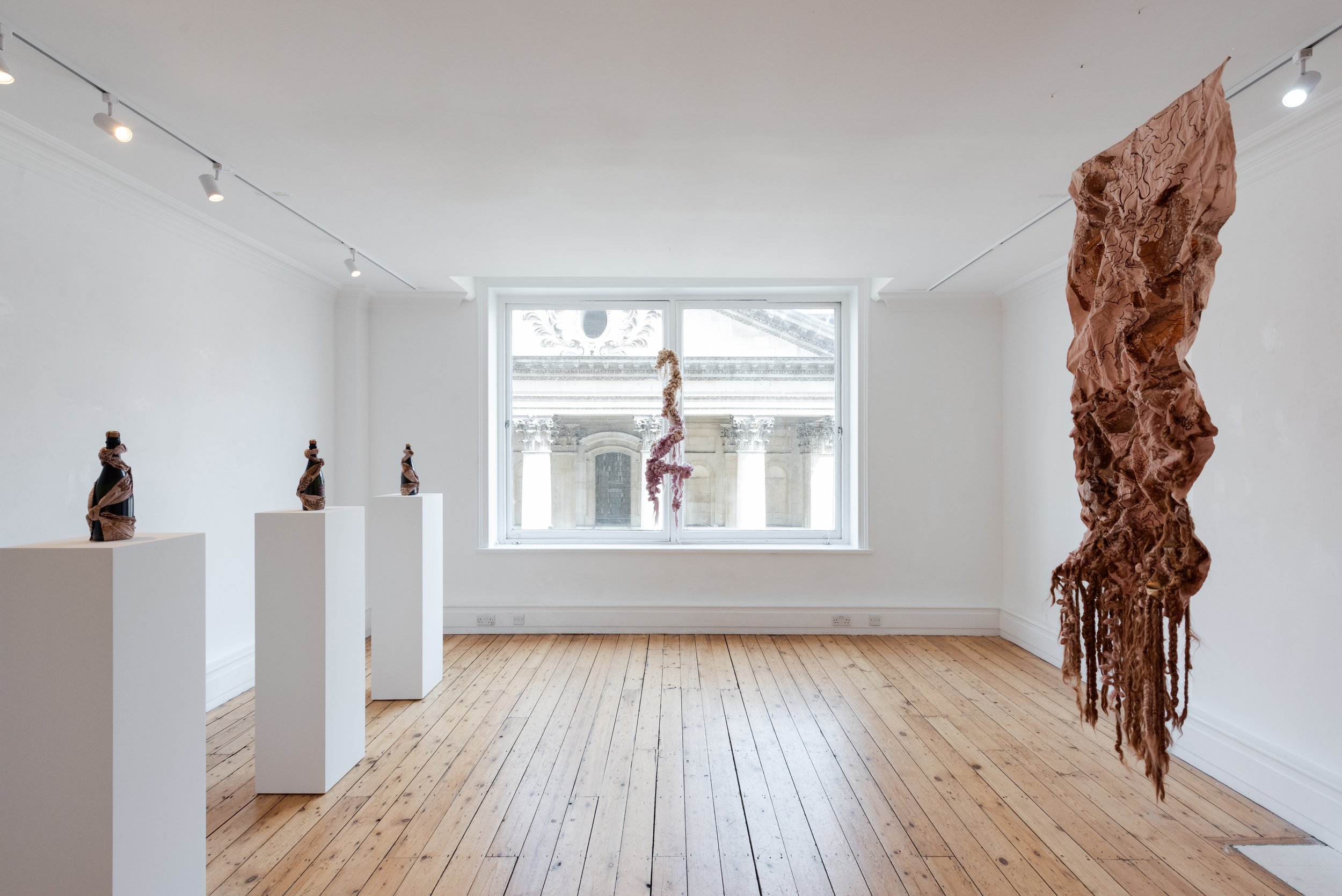
Camila Barvo presents a new body of works made in dialogue with Sugrue South Downs, the Sussex winery of Dermot Sugrue, widely regarded as one of England's finest grower-winemakers. The new works take the winery's pinot noir-dominant sparkling wine as their point of departure. Barvo, a Colombian textile and fibre artist based in London, approached the commission by asking what the winery's processes, forms and material reality might yield for her own practice.
The resulting works draw Barvo's practice of braiding, knotting and wrapping into a parallel with winemaking, where the hand and the wire, the organic and the structural, the contingent and the controlled, are in constant negotiation. Drawn to natural materials for the irreducible complexity of organic matter, Barvo found in the vineyard that same complexity, not preserved as memory or trace, but present and unfolding in real-time. It was, in the end, what her materials have always gestured towards: organic life itself, the vine growing, resisting, and being guided all at once, in all its trembling and capricious splendour. This responds to the central thesis in Joel Hart's new essay for Wyn, stated in its title: The Vine Is The Artist But Also An Animal, a text grounded in interviews with Dermot Sugrue and extensive research into authorship, craft, and decision-making in winemaking.
The largest of the three works is a wall piece, its surface built up through processes of pinot noir dyeing, screen-printing and metallic foil, buckling and folding away from itself, alive with texture and relief. The topographic tracing of the vineyard runs across it in India ink, the cartographic lines expanded to something closer to landscape, a map that has outgrown its borders. Metallic foil pools across the surface in burnished, copper-toned patches, gliding over it as the last light of afternoon gilds a hillside. As in the vineyard, while natural and human-made materials contest for dominion, their inextricable entanglement reveals a symbiotic existence. Small knots of rose-stem fibre, drawn from the woody stems of the rose plant and finer and silkier than wool, erupt at intervals like buds on a vine, or nodes in a trellis, with a natural lustre and softness that belies its thorned origin. At its base, the warp and weft are partially unravelled and threaded through with wire, the fabric gaining structure and volume from within, braided fibre tendrils hanging downwards from the opened weave like roots, or like hair, returning the work, quietly, to the body of gestures and material memories from which all of Barvo's practice grows.
The bottle edition, in a run of 100, takes the same pinot noir dyeing and screen-printing process as the wall piece and draws it into a more intimate, contained form, wrapping the wine bottle as its sculptural base. A swathe of fabric, knotted at the neck, drapes across the shoulder of the bottle and falls back at the base, the dark of the glass glimpsed in between the folds. The fabric is dyed with pinot noir to a dusty pink, carrying in its colouring the traces of a red still latent in the very grapes that make the wine inside. Over this ground, a screen-printed topographic tracing of the vineyard accumulates into a layered surface of colour, mark and texture. As a final layer, accents of copper-toned metallic foil, their fractured surfaces catching light like bubbles rising through glass. Wrapped and knotted, the piece reveals itself in layered, textural glimpses, fold over fold, inviting a slow, sensory undressing.
Barvo exaggerates this material language in the third work, a soft sculpture built on wire scaffolding, produced in an edition of five, taking the bottle edition's restrained language and releasing it into an ungovernable efflorescence. Here, Barvo again turns to rose-stem fibre, building dense, knotted accumulations, the colours drawing from the grapes themselves: the deep mauves of pinot noir, the softer pinks of pinot meunier, graduating upwards to the pale, creamy tones of chardonnay. From there the knots, like vine, gently climb upwards towards tender, soft pinks, gathering around the neck of the bottle. The neck: that concentrated point of containment, where discipline holds dominion, like the function of the cork and wire cage against a contained explosion. It is precisely here, around this small, imperious stopper, that the fibre knits itself into the finest gauge, enveloping the neck of the bottle in a superfine enclosure, with the disproportionate, buttery warmth of a woollen embrace. Above, a sudden burst of creamy white curls, billowing and soft, extravagant in its abundance. As The Vine Is The Artist But Also An Animal concludes, great wine retains "a mythical aura" no matter how forensic one's analysis, a sentiment Dermot Sugrue echoes: "winemaking, tasting, and appreciation will always have one foot in the sacred."
Learn more about Sugrue South Downs, Camila Barvo, and Joel Hart here.
List of Works
El alambre crece en la urdimbre y la vuelve territorio / The wire grows into the warp becoming territory, 2026
Cotton, wire, rose fibre, pinot noir, coffee, ink, metallic foil
180cm x 60cm x 10cm
El nudo, como la vid, crece en silencio / The knot, as the vine, grows in silence, 2026
Wire, rose fibre, pinot noir, coffee
80cm x 30cm x 30cm
Edition of 5
Edition II, 2026
Cotton, pinot noir, ink, metallic foil
Wine: 48% Pinot Noir, 18% Pinot Meunier, and 34% Chardonnay
Numbered and signed
ABV 12% Vol. 750ml
32.5cm x 12cm x 12cm
Edition of 100
The Vine Is The Artist But Also An Animal Artist
36 Pages
Edition of 600
EDITION I
HUNDRED HILLS X SONYA DERVIZ X HENRY JEFFREYS
7 July, 2025
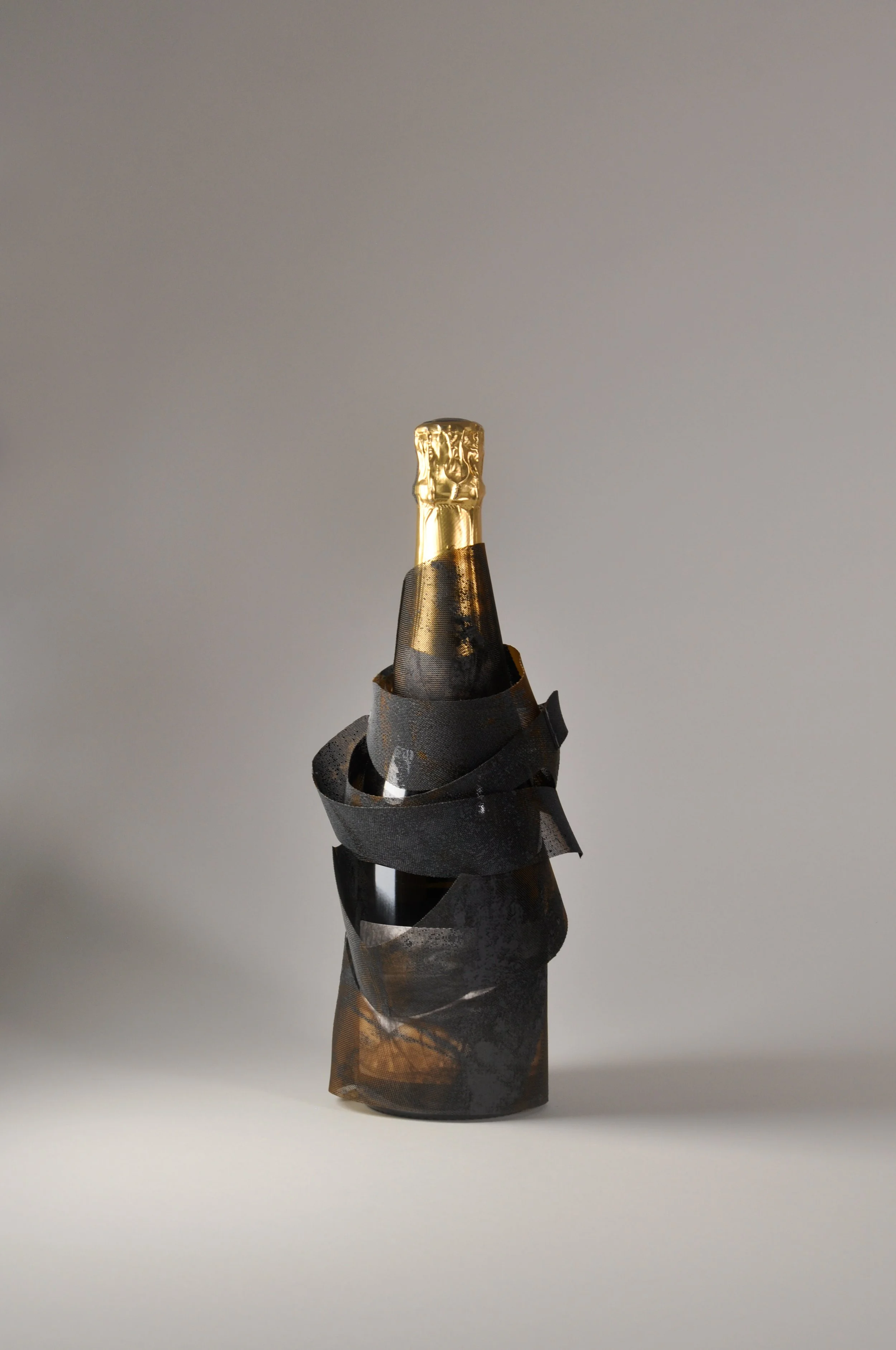
The inaugural Wyn edition in collaboration with Hundred Hills (First Edition 2018) features a work by Sonya Derviz and a printed edition with new writing from Henry Jeffreys. The wine was limited to 120 bottles.